



Ioniq 7 by Hyundai: A Box of Surprises in the EV World
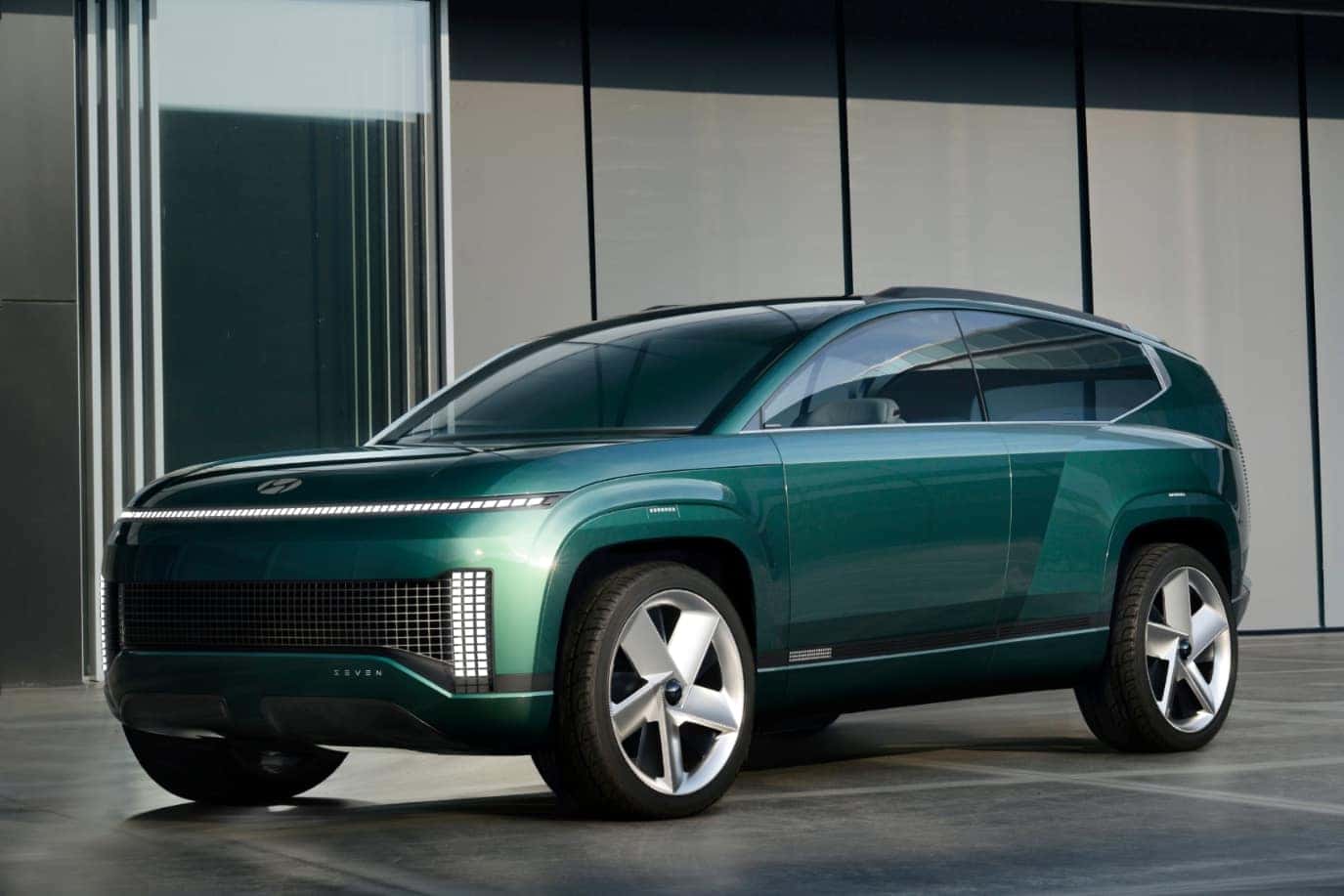
Hyundai is strategically expanding its all-electric Ioniq brand, showcasing models like the recently unveiled Ioniq 5 and the Ioniq 6 as trailblazers in this endeavor. The next addition to this lineup is expected to be the Ioniq 7, signifying Hyundai’s commitment to providing a full-size, all-electric SUV to a wide consumer base. As of the time of this writing, while certain details about the brand’s first full-size electric SUV remain undisclosed, a combination of insights from the Ioniq Seven concept and sightings of pre-production prototypes in real-world scenarios is gradually shedding light on the forthcoming model.
A Modern, Distinctive Design Combining Elegance and Innovation
A cursory glance at the Ioniq SEVEN Concept and recent sightings of Ioniq 7 prototypes underscores Hyundai’s intent to embrace a boxier design reminiscent of traditional body-on-frame SUVs. While the exact dimensions of the Ioniq 7 remain undisclosed, it firmly occupies the full-size segment, albeit possibly deviating slightly from conventional standards. The emphasis on providing a spacious cabin may lead to a somewhat shorter front end.
Characterized by a blend of retro and futuristic design elements, the Ioniq 7 promises to carve out a unique niche in the market. It is expected to incorporate the pixelated lights seen on the Ioniq 5, albeit with a more contemporary interpretation, differentiating it from the Ioniq 5 primarily through its size. Furthermore, the vehicle is likely to feature a low-slung roof inspired by the Concept Seven, although the concept’s suicide doors are unlikely to make it into production. Envision a predominantly glass greenhouse offering excellent external visibility with a nearly all-glass roof.
While the interior of the Ioniq 7 remains shrouded in mystery, Hyundai Motor America’s CEO, Jose Munoz, has hinted at similarities between the production vehicle and the SEVEN Concept. However, the feasibility of translating all the concept’s avant-garde features into the production version is uncertain, mainly due to current safety regulations. It is plausible that certain elements, such as the mini fridge and the OLED glass roof, may make it to production. Nevertheless, the concept’s swiveling seats, couch-like configuration, and other futuristic attributes may be curtailed. Given the industry’s current landscape, it is reasonable to expect three rows of seats accommodating 7 or 8 passengers, with the rear-most bench potentially being optional or foldable for increased cargo space.
Performance
The Electric-Global Modular Platform underpins Hyundai’s inaugural large electric SUV, shared with sister brand Kia and also featured in the Hyundai Ioniq 5. While precise performance details for the Ioniq 7 are undisclosed, we can draw parallels with the smaller Ioniq 5. As of now, the Ioniq 5 offers two configurations: a single-motor rear-wheel-drive (RWD) version and a dual-motor all-wheel-drive (AWD) variant. The single-motor model generates either 169 or 225 horsepower, depending on the battery size, along with 258 pound-feet of torque. Opting for the AWD model provides 320 horsepower, 446 pound-feet of torque, and a larger battery.
Considering the larger stature of the Ioniq 7, it is reasonable to assume that Hyundai will opt for higher output configurations, potentially excluding the 168-horsepower option and making 225-horsepower the base offering. It is also plausible that the company will standardize the Ioniq 7 with a dual-motor AWD setup, offering a standard output ranging from 250 to 320 horsepower. Additionally, the existence of the Ioniq 5 N implies that the Ioniq 7 could potentially offer a maximum of 641 horsepower and 545 pound-feet of torque in its highest performance configuration.
Alternatively, the Ioniq 7’s powertrain configurations might align with Kia’s EV9, which spans output from 215 horsepower and 258 pound-feet of torque to as much as 379 horsepower and 516 pound-feet of torque.
While concrete details about the Ioniq 7’s electrical system are limited, Hyundai has set a target range of 300 miles, which suggests a departure from the Ioniq 5’s 58-kWh battery in favor of a larger battery, likely exceeding 100 kWh. This larger battery capacity should provide at least 300 miles of range. Hyundai claims that the Ioniq 7 can charge from 10 to 80 percent in approximately 20 minutes when connected to a 350-kW fast charger, mitigating concerns about extended breaks during long journeys.
Pricing
Hyundai has been making strides in moving upmarket but remains committed to maintaining competitive pricing. Initial estimates place the entry-level SE model within the $50,000* range, with prices potentially reaching up to $65,000* for the SEL trim and perhaps $75,000* for a hypothetical Ioniq 7 N variant. This pricing strategy positions the Ioniq 7 favorably against rivals like the Rivian R1S, Tesla Model X, and Volvo EX90, which command significantly higher starting prices.
While an exact on-sale date remains unconfirmed, and the production version of the Ioniq 7 has yet to be unveiled, a potential reveal could occur before the close of 2023 or early in 2024, with sales commencing shortly thereafter. The Ioniq 7 is likely to debut as a 2024 model, though it’s important to note that any delay in an official unveiling before March 2024 could push its release to the 2025 model year.
Southern Team Hyundai
When the day finally comes for the production version of the Ioniq 7 to hit North American soil, be sure to make your purchase at Southern Team Hyundai, as we carry an extensive range of vehicles from the popular brand. Check out our online new car inventory to see all that we have to offer and chat with one of our representatives for more information.